Turning an empty backroom or basement into a local delivery hub helps you attract new customers and earn extra money. Learn how to:
- Upgrade Your Space: Building organized packing stations and investing in inventory software speeds up fulfillment.
- Use the Right Loans: Keep upfront costs low by using construction loans, SBA programs and lines of credit.
- Protect Your Profits: Adjust your online pricing and market to new neighborhoods to help increase your profit margins.
Have you ever looked at your empty spaces, like backrooms, basements or storerooms, and wondered if the space could serve as a more useful purpose? One laundromat owner did. They realized that their business was typically slower on weekday mornings and decided to start a pickup-and-delivery wash-and-fold service to keep their washers and dryers running. They transformed an unused back room into a pickup, folding and packing center where they could process delivery orders without interrupting walk-in customers. This simple update allowed them to use their existing machines to launch a local delivery option and bring in more sales.
Rather than letting your unused space gather dust, you could turn it into a fulfillment area. By working with small business lenders to update your layout, you can bring your best products straight to your customers' doorsteps.
Why Update an Underused Space?
When you turn a backroom, basement or storeroom into a fulfillment area, you stop seeing your extra space as empty storage and instead view it as a way to earn more money while paying the same rent or mortgage amount.
This strategy can help you grow your business quickly while minimizing your financial risk. For example, if a local store wanted to reach customers on the other side of town, the owner might need to sign a lease on a second building, hire a new team and pay double the utility bills. But updating an existing space changes that scenario.
Investing in building improvements and equipment takes planning, but the long-term benefits can be a game-changer for your business.
- Multiple Ways To Sell: You can keep serving in-person shoppers while also selling products to customers who want to buy online.
- Increases Property Value: If you own your storefront, remodeling your space increases the value of your property.
- Broaden Your Local Reach: Instead of relying only on walk-ins, you can use delivery apps and local drivers to expand your reach and customer base to neighboring ZIP codes.
How Can You Prep for Fast Fulfillment?
Turning your extra space into a fulfillment center starts with making the space easy to work in. Upgrading your backroom helps your team pack orders without getting in the way of walk-in customers. Here are some tips to get started:
- Build a Packing Station: To quickly pack orders, you need an organized workspace. With the help of retail space financing, you can make updates like setting up packing benches, sealing concrete floors and adding extra outlets for the digital tools your team needs to prep local deliveries.
- Create a Dedicated Pickup Spot: Customers want speed and convenience. If someone chooses curbside or same-day pickup, you can use a small business loan to build a separate pickup spot right by the front door.
- Upgrade Your Lighting, Shelving and Loading Areas: Better lighting and more functional shelves make a big difference. Business owners often use financing to install heavy-duty industrial shelving, switch to bright LED lights to help with packing, and widen back doors or add ramps for easy loading.
How Can You Fund the Extra Inventory Needed for Delivery?
To fulfill orders, you can't run out of your best-selling items. While standard business loans are great for fixed costs like construction, a business line of credit is the best tool for buying inventory. A business line of credit is like a credit card for your business. It gives you the flexibility to borrow money to buy items in bulk to get a better price from your suppliers; then pay the balance back. This allows you to purchase what you need without draining your business bank account.
What Does the Business Financing Process Look Like?
Getting a loan doesn’t need to be stressful or overwhelming. Think of it as a step-by-step project you work on with your banker to make sure your new delivery plan is profitable. Here are three simple steps to guide you through the process.
1. Figure Out Your Costs
First, make a list of your expenses. Learning how to calculate expansion costs for small business projects means getting quotes from contractors for shelves, lighting and software. You will also want to estimate your new delivery costs to make sure the extra sales will cover the investment.
2. Choose the Right Loan
A remodel typically requires hiring contractors and changing your layout. There are many lending tools that are available to get your project approved and built:
- A Conventional Commercial Construction Loan: A commercial construction loan is typically structured as a draw-down line of credit. Your bank holds the funds and releases them in draws only after your contractor hits specific milestones, like finishing the shelving or completing the wiring. During construction, you only pay interest on the money that has been spent, which helps keep your monthly costs low. Once the project is done, the loan converts to an amortizing loan where you will make principal and interest payments.
- An SBA Guarantee Loan: Lenders often use loans from the U.S. Small Business Administration. SBA loans can help small business owners improve real estate, purchase equipment or machinery and secure cash to manage daily operations or support expanded and new operations. Because the government agrees to repay a portion of the money if the business fails, banks are willing to approve loans that do not fit traditional lending guidelines.
There are key factors that financial institutions consider to determine the creditworthiness and viability of your business. But, in general, they look for a steady business history, good personal credit and proof that your store will make enough money to pay the loan back. You will need your recent tax returns, profit and loss statement, a current balance sheet, contract estimates and a budget for your new fulfillment operation.
3. Talk to Your Local Banker
Partnering with a local community banker is an advantage because they understand your neighborhood, know the regional market and can help you apply for local and federal loan programs. Additionally, many established community banks, like Northwest Bank, hold SBA Preferred Lender Program (PLP) Status. Preferred lenders have the authority to underwrite and approve loans without sending the paperwork to the federal government for review. This eliminates bottlenecks and can cut weeks off the approval timeline..png?sfvrsn=fda92cfd_3 "Loan Prep Checklist") What Digital Tools Do You Need To Scale Up?
What Digital Tools Do You Need To Scale Up?
Beyond the physical space, you also need the right digital tools to keep everything organized. Investing in software makes it easy to manage your new delivery options. Here are a few options to consider:
Live Inventory Tracking
You can use small business financing to buy inventory management systems. This software connects your website to your physical store, making sure your online store always shows exactly what is sitting in your backroom in real time.
Smart Routing Software
Delivery software can do the heavy lifting for you by automatically grouping orders by ZIP code, calculating the fastest routes for your drivers and sending text or email updates to your customers when their order is ready or on its way.
Handheld Scanning Technology
Business owners frequently use financing to invest in handheld barcode scanners or inventory tablets. Scanning items as they arrive in your receiving area or get packed into boxes reduces errors and manual data-entry bottlenecks.
Website and POS Integration
Software integrations tie your point-of-sale system directly to your e-commerce website. This means if a walk-in customer buys the last item off your sales floor, your online store reflects that update so an online customer doesn't buy a missing item.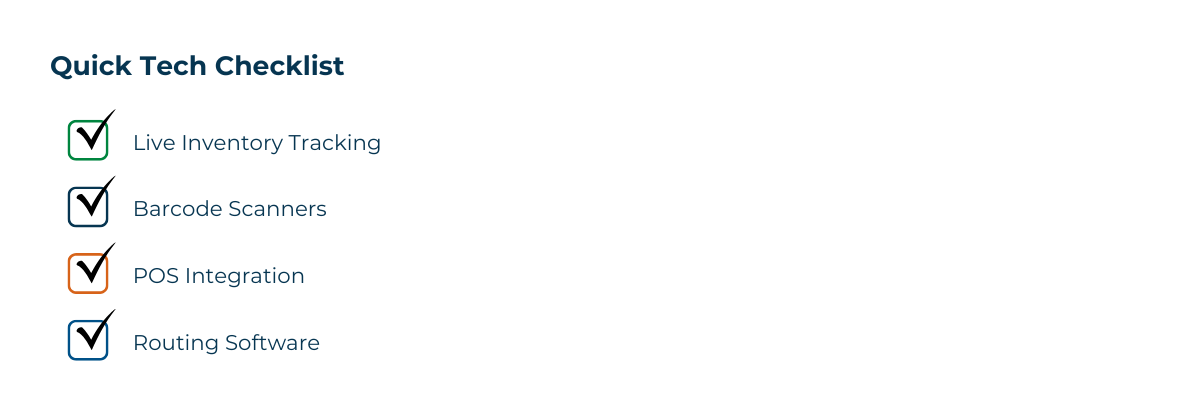 What Risks Should You Plan For?
While adding a fulfillment and delivery service is an exciting way to grow, there are a few common pitfalls that store owners should anticipate:
- Monitor Your Existing Sales: If your current walk-in customers switch to ordering delivery from home, your total sales won't grow but your delivery expenses will. Make sure your strategy focuses on reaching new customers.
- Weigh the Cost of Third-Party Apps: Using third-party delivery apps is incredibly easy because you don't need to buy a delivery vehicle. However, if a third-party driver damages an order or behaves unprofessionally, it still reflects poorly on your brand. Consider starting with third-party apps to test the market; once your delivery volume grows, use a small business loan to buy your own vehicle and driver so you can control the customer experience.
- Price Items Correctly: Delivery introduces new expenses like packaging, driver expenses or fees for the app. To protect your bottom line, you should make sure your delivery items are priced correctly — which may mean charging slightly more online than you do in-store to cover the extra costs.
- Be Realistic About Early Sales: Many business owners who successfully launch a delivery model might see their initial sales take longer to ramp up than they expected. Keep your early sales goals conservative so you do not over-borrow.
By combining smart planning with flexible financing — like construction loans for a remodel and lines of credit for inventory — local shops can build a strong, multifaceted business.
If you are ready to unlock the potential in your extra backroom or basement space, take the first step today. Reach out to a Northwest Bank Business Banker to build a plan that fits your business goals.