
Online Banking Login
Online Banking Login

A startup working capital loan provides flexible short-term cash to cover daily operating expenses and manage cash flow as your business grows.
You have a great idea for a small business and the motivation to make your dream happen. But after you buy a building and equipment, how do you pay for everyday expenses, cover payroll expenses and purchase inventory? A working capital loan could be the answer.
A working capital loan is a flexible, short-term financing option designed to cover a new business’s daily operational expenses, such as payroll, rent, inventory and marketing, before sales revenue kicks in. Unlike traditional loans tied to a single piece of equipment or real estate, startup working capital provides cash to bridge the gap between initial costs and profitability.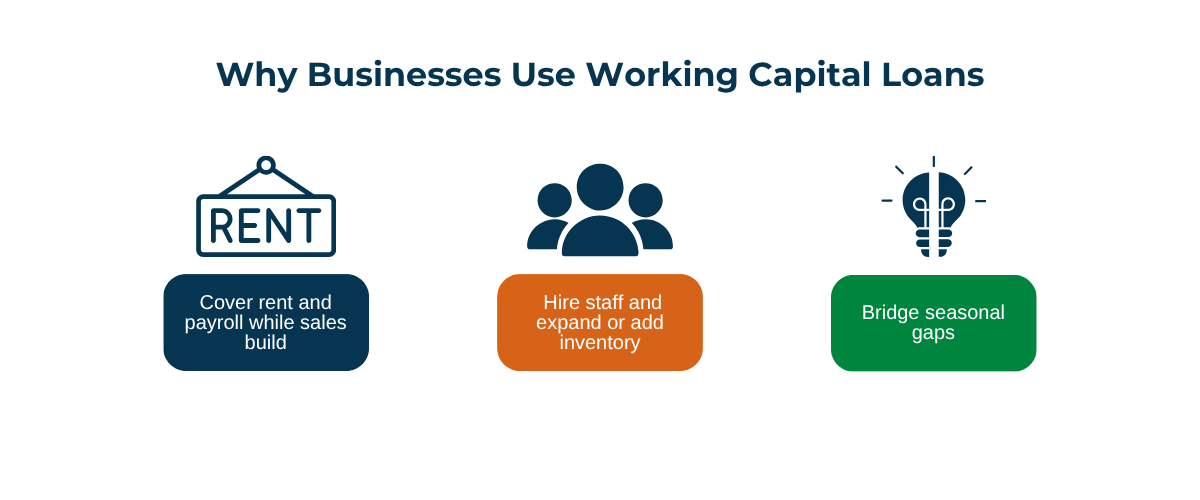
Every small business experiences gaps between when bills are due and when customer revenue comes in. A working capital loan provides the cash needed to bridge these timing gaps and keep daily operations running without interruption. Instead of draining emergency cash reserves to cover these upfront expenses, the business owner uses a working capital loan. The funds cover vendor bills and employee payroll. Once the client settles their invoice 30 to 60 days later, the owner pays down the balance.
Common examples of why a business needs a working capital loan include:
Working capital loans and traditional business loans differ in two ways: timeline and asset.
A working capital loan matures in one year and has monthly interest payments. Since it’s a short-term loan, the lender will review the loan status with the borrower on a yearly basis. In contrast, a traditional business loan can be paid off over a far longer period of time. For example, an equipment loan may take up to seven years to pay off, and a building loan can have a term of 20 years or more.
This difference in timeline is largely due to a difference in how the loan operates. With a working capital loan, there is usually not one set asset for which the loan is paying. It could be financing the building, employees and inventory simultaneously. In contrast, a traditional business loan is typically a fixed amount of money used to purchase a specific asset, like a car or a building.
Applying for financing is straightforward when you work with experienced financial partners who understand small business growth. Depending on your goals, there are two ways to get a working capital loan: conventional commercial lending or government-backed Small Business Administration (SBA) loans.
A commercial lender, like Northwest Bank, can help your small business apply for a working capital loan. Dedicated bankers can evaluate your business or explore specialized startup business loans to establish a flexible line of credit tailored to your needs.
An SBA working capital loan is another way Northwest Bank can work with you to get small business financing. The SBA helps bridge common gaps like not having enough property or physical assets to use as collateral. Since the SBA provides a government guarantee to lower the bank's risk, it helps lenders more easily approve loans for new ventures, business purchases or working capital needs that might not fit traditional rules.
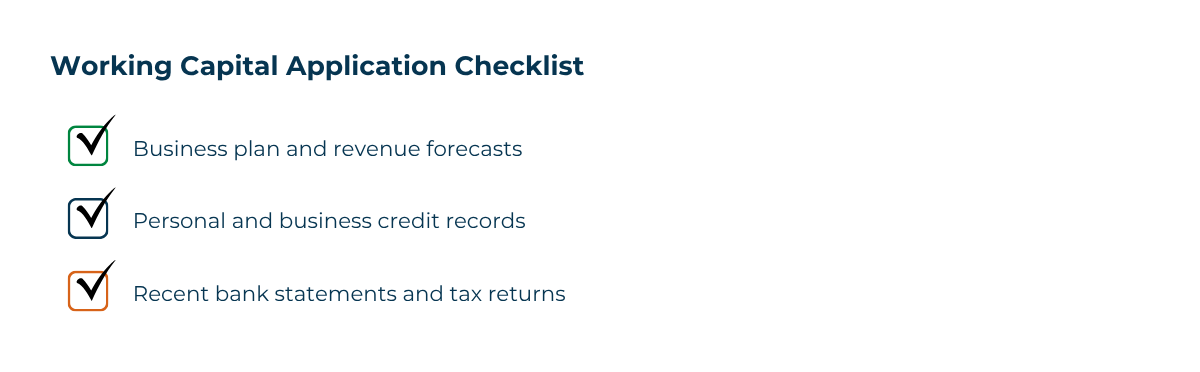
To make the application process as smooth as possible, gather these key items ahead of time:
As you start or expand your small business, having access to cash to keep money flowing is essential to your success. With a working capital loan, Northwest Bank can help you bridge the gap between expenses and revenue. And this gives your innovative ideas and growth strategies time to flourish.
If you’re interested in applying for a working capital loan, visit with one of our commercial banking experts today to begin discussing your options.
Experience the Northwest Bank difference--the better banking experience. Contact us today and let's build a brighter financial future together!


Mon - Fri: 7:00 AM - 7:00 PM CST
Sat: 8:00 AM - 12:00 PM CST
General Support: 800-678-4105
