A profit and loss (P&L) statement proves to lenders that your business makes enough money to repay a loan. This article covers:
- What a P&L statement measures.
- Why bankers require a P&L statement along with your balance sheet.
- How lenders review your numbers and calculate your debt service coverage ratio (DSCR).
- How to prepare for a successful meeting with your business banker.
If you are growing an existing business, getting a loan comes down to one simple question: Does your business make enough profit to pay back what it borrows? To find out, lenders look at your P&L statement.
Sales only tell part of the story, but your P&L shows how well you manage growth. Imagine a business that doubles its sales from $200,000 to $400,000 after opening a second location or buying new equipment. Upfront costs might reduce profits at first, but income increases once those initial costs are paid. This shows lenders that smart spending can lead to long-term success.
Lenders check your P&L to review profit margins, verify cash flow and calculate key ratios like your DSCR. Knowing these numbers gives you the confidence to make smart choices and prove your business is ready to expand.
What Is a P&L Statement?
A P&L statement, often called an income statement, tells whether your business made or lost money over a specific timeframe, whether that’s a month, a quarter or a year.
Unlike a snapshot of your bank account balance, a P&L acts like a financial report card over time. It tracks every dollar coming in and going out. By looking at a year of activity, you can see seasonal trends, identify peak sales periods and make sure your operations are generating income.
What Key Areas Do Lenders Focus On When Reviewing a P&L Statement?
Lenders use your P&L statement as a roadmap to understand your business's financial health. Here are the main areas they look at to evaluate your business.
Revenue
Revenue is the total amount of money your business brings in before subtracting any costs.
Cost of Goods Sold and Gross Profit Margin
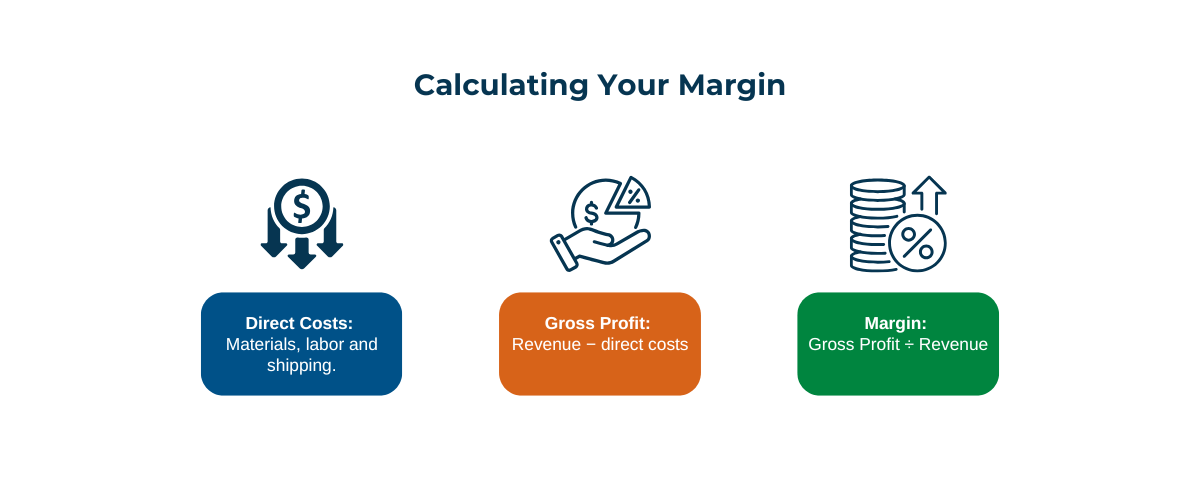
Cost of goods sold includes direct costs needed to create your product or deliver your service, such as materials, labor and shipping. Here’s how to calculate:
- Gross Profit: Subtract the cost of goods sold from your revenue to calculate your gross profit.
- Gross Profit Margin: Divide gross profit by total revenue to get your gross profit margin percentage.
Your gross profit margin shows how well you price goods and manage production costs. For instance, if you earn $100,000 in revenue and your costs are $40,000, your gross profit is $60,000, giving you a healthy 60% gross profit margin. A solid margin proves to lenders that your business operates efficiently and is built to earn a profit.
Operating Expenses
Operating expenses are the ongoing costs required to run your business. These include fixed expenses like rent, utilities, insurance, staff salaries, marketing and office supplies.
Net Income
Subtracting operating expenses from gross profit leaves your net income, which is the actual profit your business keeps after paying the bills. Bankers use net income as a starting point to verify that your business earns enough to cover new payments.
Why Do Banks Need a P&L and Balance Sheet?
Small business owners often wonder why bankers ask for a P&L statement and balance sheet. While your P&L tracks income and expenses over time, lenders combine it with your balance sheet to get a complete snapshot of your business's financial health.
Your balance sheet lists what your business owns and owes at a single point in time. It highlights your assets, like cash and equipment, alongside liabilities like credit cards and existing loans. While a strong P&L proves you can generate revenue, your balance sheet shows your long-term stability and net worth.
Lenders will use the P&L and balance sheet to generate a cash flow statement, which shows the movement of actual cash in and out of the business. For instance, a P&L might show a $60,000 profit, but that may not mean your business has $60,000 cash in your checking account depending on customer payment terms. Tracking cash movement is important to ensure you have enough cash on hand, or access to funds, to operate the day-to-day activities of the business.
How Do Bankers Audit Your P&L?
When reviewing your P&L, bankers work with you to understand the complete picture of your finances.
Most lenders ask for three years of P&L statements with your current year-to-date financials. Looking at these together highlight your strengths, showing how your business steadily increases revenue, keeps profit margins healthy and adapts to economic shifts. Consistent earnings over time build strong lender confidence in your business model.
To ensure that a new loan supports your growth, bankers calculate your debt service coverage ratio. They take your net income, add non-cash costs like depreciation and interest, and compare that to your debt payments over the same time period.
Ratio requirements vary but a typical ratio is between 1.20 and 1.25, which means your business earns $1.25 in cash for every $1.00 of debt. This healthy 25% buffer helps your business stay financially stable and ready for new opportunities.
How To Prepare for a Meeting With a Banker?
Meeting with your banker is your chance to showcase your business and build a strong partnership. Lenders want to fund growing companies, and open communication helps them advocate for your loan approval.
While financial statements show what you achieved, an in-person meeting allows you to explain how and why it happened. If past records reflect major investments — like opening a new location, upgrading equipment or purchasing inventory — highlight how those decisions set you up for long-term success.
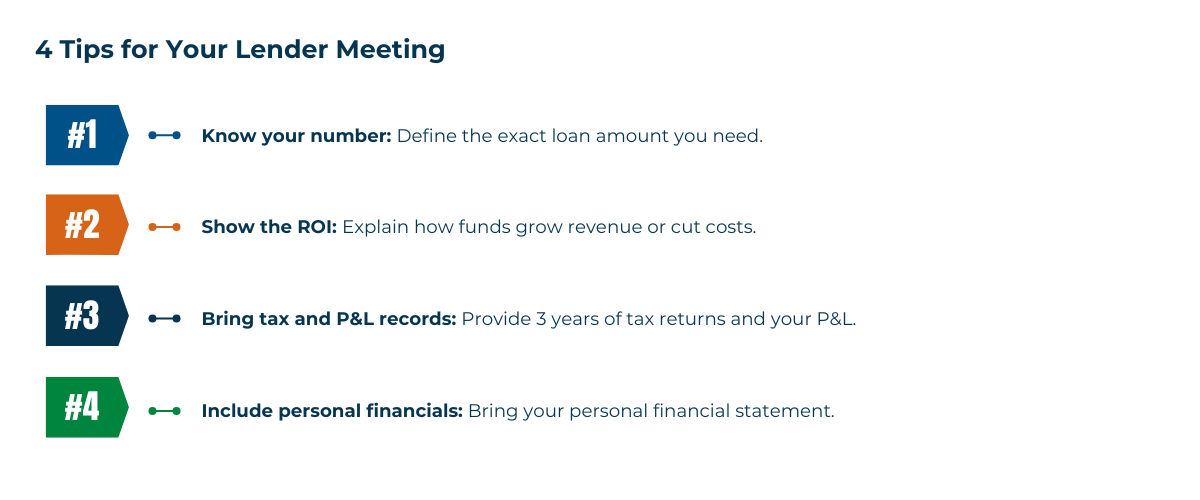
Arrive at your meeting organized and confident. Here are a few tips:
- Define your request: Know the exact loan amount you need.
- Explain the return: Demonstrate how the funds will boost revenue or lower operating costs.
- Bring key records: Provide three years of business tax returns, your current P&L statement and a personal financial statement.
Building a banking relationship is an ongoing partnership. Sharing regular financial updates builds trust, turning your banker into a valuable advisor for your long-term business success.
Understanding your P&L is the first step toward securing the capital you need to grow your business. Contact our team of business bankers to start the conversation and get expert help reviewing your financial statements.