You can protect your business from inflation by keeping an eye on expenses, managing your cash flow and leaning on expert advisors.
- Audit and Automate: Pause nonessential upgrades, review your monthly overhead, and use software to handle routine tasks like payroll and billing.
- Speed up Access to Funds: Switch to digital payments and use electronic tools to pay vendors to keep cash on hand.
- Secure Financing Options and Fraud Protection: Work with your financial partners to set up flexible lines of credit and fraud protection to safeguard your company.
Running a small business takes determination, especially when operational costs start climbing. Think about the last time you had to absorb a sudden price hike from a supplier to keep your prices fair for your customers, or had to scramble to finish a job on time when parts were stuck in transit. These moments are tough, but they also show just how resourceful and resilient you have to be as an owner.
While navigating inflation isn't easy, it forces you to look more closely at your operational efficiency and find smarter ways to manage your money. The good news is that once you understand what is driving rising costs, you can make proactive choices to protect your bottom line, improve your cash flow and keep your business growing.
What Are the Causes of Inflation?
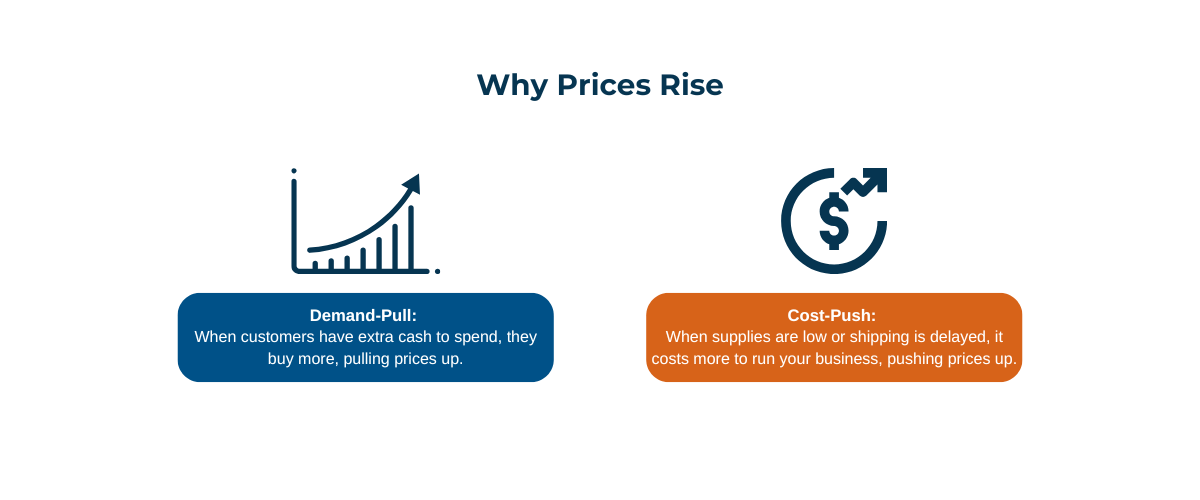
Inflation is driven by two distinct economic forces: demand-pull and cost-push. Here is a breakdown of each:
Demand-Pull Inflation
Demand-pull inflation happens when consumers have more cash to spend, causing the demand for goods and services to surge.
This typically happens during economic recoveries or after periods of forced saving. When government stimulus, tax cuts or rising wages leave consumers with an influx of cash and a desire to spend, demand quickly outpaces what businesses can supply, increasing prices.
Cost-Pull Inflation
Cost-pull inflation occurs when the supply of finished products and raw materials decreases, causing a shortage. When shortages cause prices to rise, it challenges business owners to become more resourceful.
For instance, when shipping ports face delays or staffing shortages, materials take longer to arrive. But this also creates a perfect opportunity to look closer to home, discover local vendors and build a more resilient supply chain.
Managing rising costs is always a balancing act, but it's also a chance to prove your business’s strength and flexibility. Here are a few ways you can turn these challenges into advantages:
- Squeezed Profit Margins: When the cost of your inventory and supplies increases, it affects your bottom line. Adjusting your prices to match market realities is a necessary step that protects your profitability and ensures that your business stays healthy.
- Equipment Backlogs: Shipping delays mean that tools, machinery or tech upgrades take longer to arrive. Planning ahead and ordering early is a good step to keep your business going.
- Rising Labor Costs: Finding and keeping employees has become more expensive as wages rise. Treating competitive pay as an investment rather than an expense helps you attract top talent to build a team that can help grow your business.
You don't need to make drastic changes overnight to handle these shifts. By staying proactive, you can use a few smart, practical strategies to protect your business and set yourself up for long-term success.
Proactive Ways To Minimize the Impact of Small Business Inflation
While you can’t control the economy, you can take steps to protect your bottom line, defend your margins and avoid drastic measures like layoffs or shutdowns.
Streamline and Automate Processes
Automating certain tasks can help you and your staff save time and money, eliminate redundancies and maximize productivity. You can automate financial management tasks, like payroll, bookkeeping and invoicing, as well as many marketing and sales processes. If you operate a warehouse, you can use automation software to streamline inventory management and shipping logistics.
Reduce Discretionary Spending
Try to eliminate, or at least reduce, nonessential spending. Delay facility improvements and purchases of supplies and new equipment until economic conditions improve, unless they are critical to your operation. You can also consider pausing outsourced services like cleaning or maintenance and try to take on those tasks yourself to help reduce spending.
Stock up on Goods and Supplies
Purchasing raw materials and inventory in bulk can help you get lower cost-per-unit pricing and shield your business from sudden shortages.
- The Replacement Cost Rule: When calculating your income, base your prices on what it will cost you to buy that inventory next time, not what you paid for it in the past.
- Lock in Supplier Rates: Don't wait for your vendors to raise prices. Ask your current suppliers if you can sign a six- or twelve-month contract to lock in your current rates before they spike.
If you have a clear picture of your long-term inventory needs but don’t have the cash to buy in bulk, a short-term small business loan or line of credit may be an option to help bridge the gap.
Optimize Cash Flow With Treasury Management Services
There are many treasury management services that support the financial health of your business. When it comes to addressing the impacts of inflation, here are a few tools that provide support.
- Automated Clearing House (ACH) Payments: Using ACH payments will allow you to pay your vendors on the day your payment is due instead of writing checks several days in advance. This means those funds stay in your account longer.
- Business Credit Cards: You can use a credit card to streamline your purchases and keep track of spending, no matter who on your staff uses the account.
- Remote Check Deposit: Scan and deposit client checks right from your office using a desktop scanner that connects to your PC and the internet. With it, you can electronically scan and deposit checks received from customers.
- Positive Pay: This automated tool is designed to help your business prevent fraud by verifying checks that are written and paying only those that you have authorized.
- Online and Mobile Banking: Track your balances on your phone or computer at any time. Seeing your cash flow in real time helps you make decisions about when to buy supplies or pay down debt.

Surround Yourself With Experts
Inflation is a normal part of the economic cycle, and adjusting your operations is a reality of doing business. But, you don’t have to navigate these shifts alone. Your accountant and commercial banker can partner with you to:
- Pinpoint inefficiencies and trim expenses without sacrificing your product or service.
- Optimize cash flow by evaluating working capital, structuring a flexible line of credit and implementing treasury management tools.
Contact a commercial banker today to build a proactive financial strategy to help manage the effects of inflation on your small business.