Taking action during stable economic periods gives your company the leverage and flexibility needed to navigate future uncertainty.
- Build Cash Reserves: Aim for six months of operating expenses.
- Secure Financing Early: Set up a small business line of credit or business credit card before you need it.
- Optimize Debt: Look into commercial loan refinancing to lock in favorable business loan interest rates.
- Protect Cash Flow: Prioritize collecting unpaid invoices for overdue accounts.
The state of the economy is in constant flux, so you may be concerned about the potential impact of a recession on your small business. You aren’t alone. Although most small business owners anticipate an economic downturn, many remain unprepared and haven't implemented a strategic plan.
While no one wants to think about an economic downturn, it’s important to be prepared now to make sure you are in a good financial spot. There are various strategies you can explore to recession-proof your business. Check out our tips.
1. Maintain Adequate Cash Reserves
Creating and maintaining a monthly budget is key to your financial success. A monthly budget can give you a better idea of current cash flow and operating expenses. However, don’t cut costs to get out of a recession; you need to keep selling products and make sure you have enough cash in your bank account.
Generally, businesses should have at least six months’ worth of operating expenses on hand, but exactly how much cash reserves you need depends on your business and cash flow forecast. You can also look to diversify your customer base, which could help lessen your risk if a recession were to happen.
2. Manage Business Debt and Commercial Loan Refinancing
Lenders don’t want to see a high balance on your credit card. There are plenty of ways to reduce debt, including consolidating or refinancing at a lower interest rate. Take a look at your highest interest rate and try to eliminate that payment first. For instance, you may not be able to pay off a new building purchase that’s $10,000 a month, but there could be smaller debts that you could consolidate. Paying down debt will reduce the number of bills you are paying and can reduce the total interest rate on your loans, which can allow you to pay them off more quickly.

3. Increase Your Credit Score
Regardless of whether a recession is on the horizon, it’s critical to improve your personal credit score because it can impact your financing options. You can improve your score by paying down debt and reducing the number of late payments. A good credit score typically ranges from 680 to 799, and an excellent score is from 790 to 850. You are more likely to get approved for a business loan and have better financing terms and lower interest rates if your credit score falls within these ranges.
4. Apply for a Business Line of Credit
A line of credit remains one of the most flexible financing options for growing companies. You can borrow as much money as you need up to a set dollar amount and only pay interest on the outstanding balance after you secure a line of credit.
It’s best to apply for a line of credit before you need it. If your small business is in need of funds quickly, it may be harder to qualify.
5. Evaluate Short-Term and Long-Term Small Business Financing
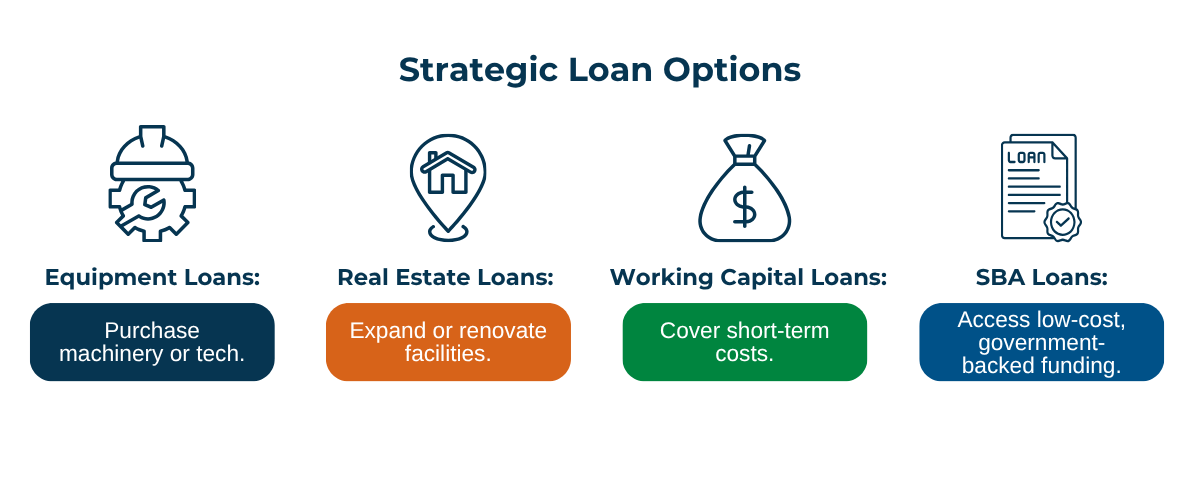
You may be tempted to cut costs, but now might be the right time to invest in increasing your inventory, adding equipment or purchasing real estate to help your small business serve more customers. Plenty of small business loan options are available, such as equipment loans, real estate construction loans, working capital loans and Small Business Administration (SBA) loans. A commercial banker can help you evaluate which short- or long-term financing options will benefit your business.
6. Lock In Lower Interest Rates
If you have a building on a bank note, now would be a good time to lock it into a longer term. Business loan interest rates typically follow a benchmark interest rate. As the federal interest rate increases, it’s likely many small business rates will rise - and they usually fall at a steep angle. If a recession were to happen and you had assets to match the term, you could secure a loan and lock rates into a longer term.
7. Get a Business Credit Card
Look into a business credit card if you don’t already have one. A credit card can help you keep track of expenses and save your business money with cash-back rewards as well as other perks, such as free online expense reporting tools and mobile payment capabilities. Banks can often offer you a flexible, low-cost credit card or a 0% introductory rate.
8. Contact a Commercial Lender
If you are uneasy about the economic situation, contact your Northwest Bank commercial banker. They can set aside time to go over your past years’ performance on a quarterly or annual basis to make sure you are in a good position if a recession were to happen. Lenders would rather work with you on your payments than see you default.
While no one knows for certain whether a recession will happen, it’s always good to be prepared. Reach out to one of our Business Bankers today to see how they can help your small business plan ahead.
While no one wants to think about an economic downturn, it’s important to be prepared now to make sure you are in a good financial spot. There are various strategies you can explore to better weather a recession. Check out our eight tips.